Eating Habits
Seeing Your Body as a Tool: The Last Step in Overcoming Body Image Obsession (CrossFit, Yoga, Slow Eating)
Even after clearing your whole environment, one last step remains. The path of seeing the body that was always being judged as a tool you use. Exercise, slow chewing, and the story of how Kkokkkok was born.
- #how to overcome body image obsession
- #body image obsession
- #body acceptance
- #crossfit benefits
- #yoga acceptance
- #slow eating
- #breaking diet obsession
- #eating disorder recovery
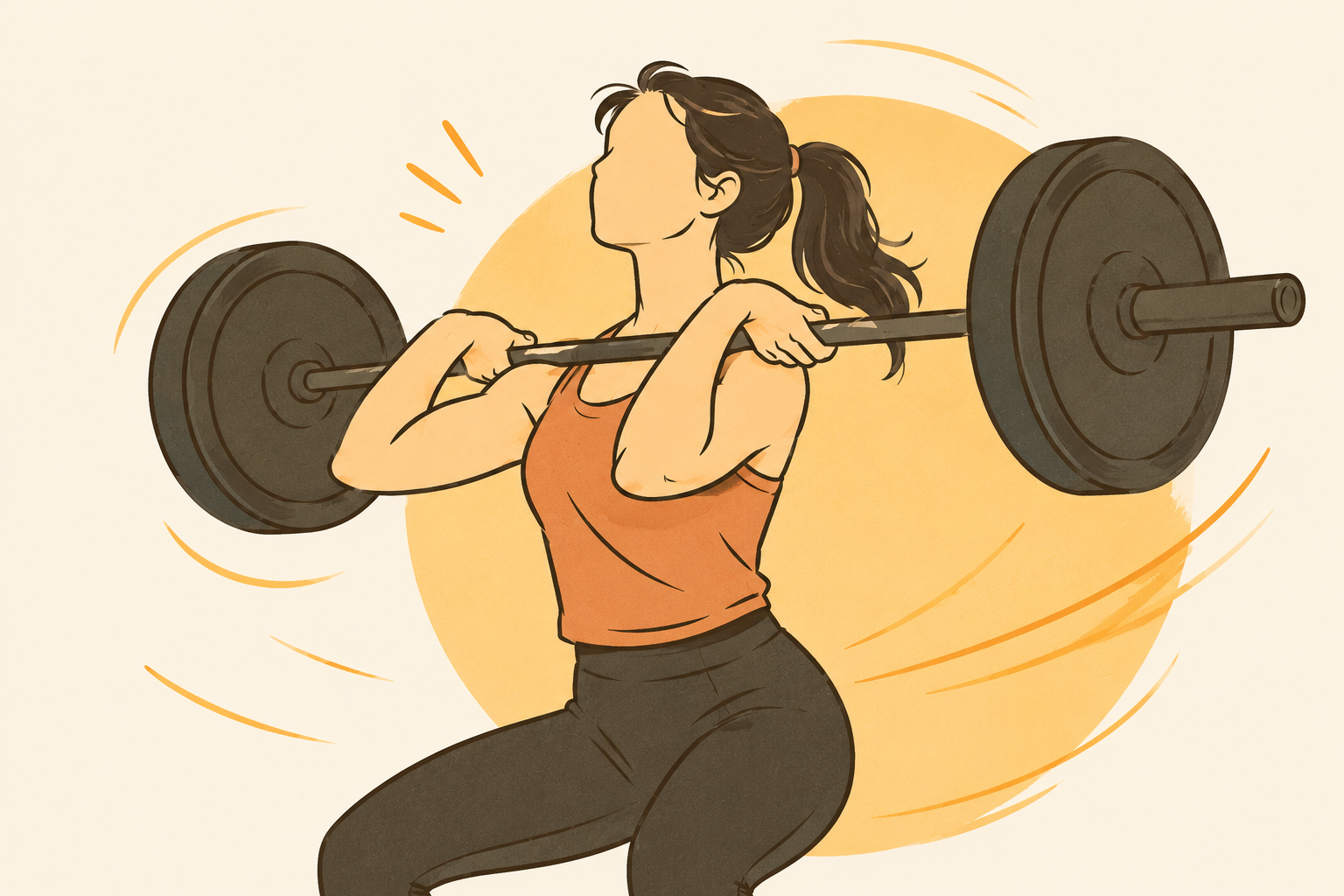
Seeing Your Body as a Tool: Body Image Obsession, the Last Step
In the last two posts, we touched on two things.
In Part 1, that body image obsession can't be solved with looks.
In Part 2, that the obsession has to be solved in your external environment.
But even after clearing the whole environment, one thing was still left.
"So how am I supposed to see the person in the mirror now?"
How do you re-see a body that has been judged your whole life.
This last step was the real ending of overcoming body image obsession.
If I sum up the answer in one line, it's this.
You have to re-see your body, from "an object being judged" to "a tool I use."
Today I'll lay out two ways to do that. Exercise and slow chewing.
And finally, I'll tell you why I ended up making the Kkokkkok app.
👉 Internal link slot: "Solve the Obsession from the Outside" (Part 2, Environment)
The judgment is yours to make; I'm just someone sharing information and experience.
How You See Your Body: An Object Being Judged vs. a Tool You Use
First, let me lay out the biggest shift in perception.
People who live their whole lives inside body image obsession share one common belief.
"My body is an object that other people judge."
This belief accumulates from childhood. A parent's words, a friend's offhand comment, appearance-centered media content, self-evaluation in front of the mirror, all of it reinforces the belief that "my body is an object to be judged."
As long as you stay inside this belief, no matter how much you clear your environment, the way you see yourself from within is still the gaze of judgment.
So the last step is a shift in perception.
"My body is not an object that other people judge, but a tool I use."
The two most powerful tools for making this shift are exercise and slow chewing.
Exercise ① CrossFit: An Environment Where Strengths Become Visible
In my twenties I quit and rejoined a gym every single year because of dieting, and I poured money into Pilates, yoga, swimming, and more.
But I never lasted a year at a single one.
The reason was simple. The goal of every workout was dieting. If the weight came off, fine; if not, on to the next workout.
Exercise was a tool for judging myself.
Then I found CrossFit.
I've been going for over a year now, almost two years.
The biggest impact CrossFit had on me was the atmosphere of the box.
An Environment Where Being Good, Not Looks, Is What's Cool
At a CrossFit box, the person who's good at the workouts is the best.
It's absolutely not because I'm an extrovert.
At a CrossFit box, nobody talks about whose body is pretty, who's thin or thick, none of that.
People who lift heavy and do toes-to-bar well, those are the people everyone admires.
Especially when women are good at it, it's genuinely so impressive.
This was the exact opposite of the environment I'd worked out in during my body image obsession.
- Diet gym: "How many kg did you lose today?" is the greeting
- CrossFit box: "You really nailed that weight yesterday" is the greeting
Inside this atmosphere, the way I saw my own body slowly changed.
Every Body Type Has Different Strengths
After doing CrossFit for over a year, I made an even bigger discovery.
Every body type has different strengths.
| Body type | Strength |
|---|---|
| Carries a bit more weight | Lifts heavy well |
| Carries a bit less weight | Does gymnastics movements well |
| Well-developed lower body | Huge advantage in lifting |
| Well-developed upper body | Bar movements are excellent |
When you do CrossFit, no matter what body you have, there's a workout you're good at thanks to that body.
So you become grateful for your own body.
I, too, lived my whole life hearing my mom say every day, "Your thighs are so thick, what are we going to do, you take after me."
I often got the gaslighting that "your hands and feet are big, so you're not feminine," too.
Now I'm grateful for these thighs because they let me work out better.
And if your hands are small, no matter how strong you are, you slip during bar movements. I think how lucky I am that my hands are big.
The very parts my mom gaslit me about for 30 years are now the parts I'm most grateful for.
This is the greatest gift CrossFit gave me.
Exercise ② Yoga: The Exercise of Acceptance
Last year, while living on Jeju Island, I naturally started going to a yoga studio too.
Not regularly, but whenever my body ached.
Yoga is the exercise of accepting my body.
By becoming aware of parts of my body I didn't know, like "oh, so this is how the pinky toe moves," I keep practicing accepting my body positively.
In fact, I found that yoga teachers do a lot of this acceptance-based work.
CrossFit + Yoga: The Two Wings of the Shift in Perception
If I sum up these two:
- CrossFit: the discovery that "there's something I'm good at thanks to this body"
- Yoga: the practice of "seeing this body just as it is"
For me, these two were the two wings of overcoming body image obsession.
With only CrossFit, there's a risk of turning workout performance into yet another standard for judgment. ("Why can't I do toes-to-bar?")
With only yoga, acceptance gets emphasized and you might not know your body's strengths.
Doing both together, or in the ratio that fits you, creates the most powerful shift in perception.
The Key to Finding the Exercise That Fits You
I'm not saying CrossFit and yoga are the answer.
The key is an exercise where "there's no appearance judgment, and your body's strengths become visible."
One person we saw re-saw herself through climbing. Another through ballet. One through a dance studio.
An exercise where, when you go, appearance doesn't come up and your body's strengths naturally show.
That's the exercise that fits you.
Slow Chewing: The Final Destination of Diet Obsession
The third tool is chewing slowly and for a long time.
This was the decisive trigger for me making the Kkokkkok app.
Having dieted and purged for over 10 years, food was a truly terrifying thing to me.
With a bowl of rice in front of me, the thought "if I eat this, I'll feel guilty" came up first.
But as I built the habit of chewing slowly and long, at some point I naturally started eating a moderate amount.
"I just couldn't eat the amount I used to eat anymore."
It's not that my willpower got stronger. It's that my body's signal system woke back up while I chewed slowly.
Why Slow Chewing Connects to Body Image Obsession
What does this have to do with body image obsession?
For people with lifelong diet obsession, food is the scariest tool of judgment.
"Eat this and I'll gain weight / won't gain weight."
"Eat this and I'll be bloated tomorrow."
"Eat this and I'll feel guilty."
Every time you face food, the circuit that judges your body gets activated.
Slow chewing swaps this circuit for a different one.
"This food's taste, texture, aroma, firmness, softness…"
"How do my body's signals change while I eat this?"
From the circuit of judgment, to the circuit of sensation.
When food isn't a tool of judgment, your body isn't a tool of judgment either.
That's how I gradually drifted away from binge eating and found my healthy weight.
As I broke free from food and dieting, I actually started focusing more on my work.
And in the process, I discovered many of my strengths in areas other than appearance and body.
This was the last step in overcoming body image obsession.
👉 Internal link slot: "The Science of Chewing 30 Times: 2x DIT, 1.5x GLP-1" (Part 11)
The Birth of Kkokkkok: To Break Free Together
I made the Kkokkkok app because I wanted people like me to break free from this obsession together.
15 years of dieting, 10 years of purging, a lifetime of body image obsession.
Going through all of this time, I became certain of one thing.
Body image obsession can be solved from the outside. With exercise, with slow chewing, with clearing your environment, with distance from people, you can solve it one step at a time.
A tool for walking that step not alone, but together. That's Kkokkkok.
What Kkokkkok Does
Kkokkkok is not a tool for grooming your appearance. It's not a diet tool either.
What we help with is letting you re-see your own body.
- GLP-1 booster timer: a one-bite-per-minute signal tool for slow chewing
- Mindful eating content: videos and guides for meeting food through your senses again
- Meal feed: a space to log what you ate without judgment
- Community: a place to meet people walking the same path
- Blog content: where posts like today's gather
Over 4 months, more than 2,000 people, together with Kkokkkok, broke free from food and diet obsession, with routine rather than willpower.
I think this is the most honest tool for re-seeing your own body.
Conclusion: The End of the Trilogy
If I compress the trilogy into one line, it's this.
Body image obsession can't be solved with looks (Part 1).
The obsession has to be solved in your external environment (Part 2).
In the end, you have to re-see your body, from an object being judged to a tool you use (Part 3).
To those crying in front of the mirror every day right now, the first thing I want to say is this.
It's not your fault.
It's not because you couldn't get prettier. It's not because your willpower is weak. It's not because you didn't try harder.
After 15 years of trial and error, I became someone who isn't afraid to look in the mirror.
You can become that too.
Thank you for staying with this trilogy to the end.
📩 Let's Walk a Step Together
Our Kkokkkok is a GLP-1 booster "small-eater" app that helps you re-see your own body.
A tool created at the end of 10 years of dieting and purging.
Over 4 months, more than 2,000 people who joined us broke free from food and diet obsession, with routine rather than willpower.
Start the 7-Day Free Challenge →
Apply for a Free Kkokkkok Coach Diagnosis →
👉 See all of the Body Image Obsession trilogy:
Part 1 "Why Losing Weight Never Made Me Happy"
Part 2 "Solve the Obsession from the Outside"
Part 3 (current) "Seeing Your Body as a Tool"
❓ Frequently Asked Questions (FAQ)
Q1. Is CrossFit right for everyone?
No. CrossFit is high-intensity and carries injury risk. The key is finding an exercise where "there's no appearance judgment, and your body's strengths become visible." Among many options, climbing, ballet, dance, hiking, swimming, find the one that fits you. At first, I recommend trying out several places.
Q2. Is there scientific evidence that yoga helps with body image obsession?
There's a fair amount of research on body acceptance. Yoga is known as an exercise that strengthens mindfulness and self-compassion, and there are studies showing this has a positive effect on body image obsession and eating disorder recovery. That said, yoga alone won't solve body image obsession. It has to go together with clearing your environment and other tools.
Q3. How does slow chewing connect to body image obsession?
When food isn't a tool of judgment, your body isn't a tool of judgment either. When you meet food through your senses while chewing slowly, the circuit of sensation gets activated for your body's signals too. This circuit slowly weakens the circuit of "my body is an object to be judged."
Q4. Does slow chewing help with stopping purging?
It does help, but purging is a form of eating disorder and is hard to stop by willpower. Please be sure to get help from a psychiatrist or an eating disorder specialty clinic. Slow chewing is good to use as a supporting tool in the recovery process. I purged for 10 years too, and I received professional help alongside it until I stopped.
Q5. Is Kkokkkok a diet app?
No. Kkokkkok is a GLP-1 booster "small-eater" app that helps you find a healthy weight without dieting. It's a tool for breaking free from diet obsession and listening to your body's signals again. It's less of a "weight-loss app" and closer to an "app for meeting yourself again."
Q6. How long does it take to apply the whole trilogy?
About 1 to 3 years on average. Clearing your environment (Part 2) takes 1 to 2 years, and the tools (Part 3) take 1 to 2 years. Don't try to do it all at once; start with whatever is most doable for you. The fact that it takes time means you're unraveling an obsession that's that deeply rooted.
Q7. What about those whose body image obsession is so deep they can't do it alone?
Please be sure to go to a psychiatrist or an eating disorder specialty clinic. If body image obsession significantly disrupts daily life, or comes with body dysmorphic disorder (BDD), an eating disorder, or depression, a professional's help is the safest and fastest path. I received professional help in my recovery process too.
※ This post is not medical advice; it was written for the purpose of sharing the author's personal experience and general information.
If body image obsession, eating disorders, purging, and the like disrupt your daily life, we strongly recommend that you seek treatment from a psychiatrist.