Health
Can You Really Afford Mounjaro for Life? — 3 Choices to Ease the Cost
Can you afford Mounjaro for life? We honestly break down why it's so expensive, how the cost adds up over a month, a year, and a lifetime, and three ways to ease the burden: staying on a low dose, splitting doses, and stopping the drug.
- #마운자로 가격
- #마운자로
- #테르제파타이드
- #GLP-1
- #위고비
- #마운자로 2.5mg
- #마운자로 분할
- #마운자로 직구
- #마운자로 요요
- #비급여
- #약값
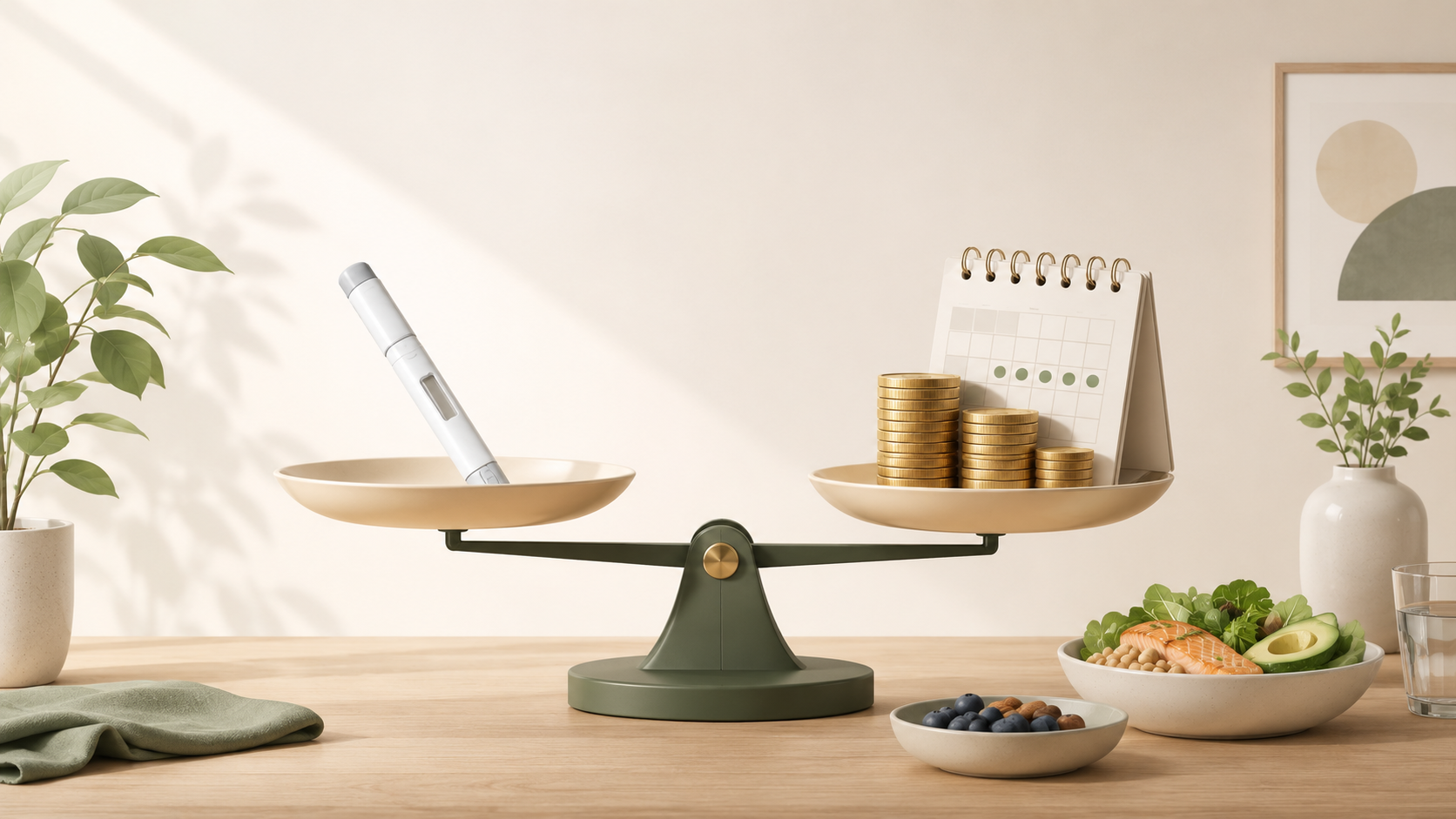
Can You Really Afford Mounjaro for Life? — 3 Choices to Ease the Cost
Mounjaro isn't cheap on a monthly basis. And it's the kind of cost that feels heavier after one or two years than it did when you first got your prescription.
One of the questions we hear most often from our users is this:
"Do I have to buy this for the rest of my life?"
For 1 years, we at Kkokkkok have built eating habits alongside people using GLP-1 medications. We've met many who had to stop because of the cost, and many who struggled with the rebound (yo-yo) after stopping.
In this article, we'll honestly walk through why Mounjaro costs so much, how the cumulative cost grows, and three options for easing the burden (staying on a low dose, splitting doses, and stopping the drug) — as honestly as we know how. The decision is yours; we're just here to give you the information.
Why Is Mounjaro So Expensive? — Understanding the Cost Structure
Mounjaro is a GLP-1 class medication with the active ingredient tirzepatide. In Korea it's prescribed off-insurance for obesity, so national health insurance doesn't apply. There are roughly four reasons the price runs high.
1) Non-reimbursed prescription — When insurance doesn't apply, the full cost falls 100% on the patient. A single Mounjaro pen (usually a 4-week supply) is already significant, and prescription and consultation fees are added on top.
2) Single-manufacturer supply — Mounjaro is supplied solely by Eli Lilly, so there's no generic competition. The same is true for Wegovy (semaglutide, Novo Nordisk).
3) Exchange rates and import costs — It's an imported drug, not made domestically, so the price swings with exchange rates, logistics, and tariffs.
4) Surging demand — Since its 2024 launch in Korea, demand has quickly outpaced supply. At one point some clinics ran out, and that affected pricing too.
Because exact prices vary widely by clinic, it's safest to ask directly where you'll be getting your prescription.
A Month, a Year, a Lifetime — The Weight of Cumulative Cost
Look at Mounjaro's price month to month and you might think, "I can handle this." But stretch out the time axis and it feels completely different.
- One month: cost of one pen
- 6 months: pen cost × 6
- 1 year: pen cost × 12 + regular consultation fees
- 3+ years: can approach the price of a car
On top of that — and this is the key part — because weight often comes back after stopping, a sunk-cost mindset kicks in: "If I stop now, all the money I've spent goes to waste." This is true for Wegovy and Mounjaro alike.
Heavier than the drug's price itself is the uncertainty of "Can I keep buying this for life?"
The First Choice to Ease the Burden — Staying on a Low Dose (2.5mg)
The most reasonable way to ease the cost burden is to not push the dose up unnecessarily. Mounjaro is usually titrated 2.5mg → 5mg → 7.5mg → 10mg, and the pen price rises as the dose goes up.
But — as we covered in detail in Part 1 — not everyone needs to climb to the top dose to see results. Among the people we've met, many said their appetite was sufficiently controlled at 2.5mg of Mounjaro. Fewer side effects (nausea, constipation) is another advantage of the low dose.
👉 Related: "Is 2.5mg of Mounjaro Enough? — The Questions Low-Dose Users Ask Most"
Of course, if 2.5mg isn't effective enough, adjusting the dose in consultation with your prescriber is the right call. But the automatic assumption that "a higher dose means faster results" is worth reconsidering — both in terms of cost and side effects.
Sometimes the lightest dose is the one you can stay on the longest.
The Second Choice — The Reality and Limits of Splitting Doses
The second attempt to cut costs is splitting Mounjaro doses. Dividing one pen into halves or thirds makes the medication last that much longer, effectively halving the monthly cost.
There's a realistic, understandable side to this choice. But — as we said in the same tone in Part 1 — splitting doses is not a medically recommended method.
- The pen is designed to inject a set dose at once.
- Splitting introduces risks around sterility, dose accuracy, and drug stability.
- Personally importing Mounjaro may violate pharmaceutical law.
👉 Related: "The Mounjaro 2.5mg Guide — The Reality and Risks of Splitting Doses"
The intent to cut costs is clearly reasonable, but if health risks follow, it can come back as an even bigger cost. If you're considering splitting, we strongly recommend talking with your prescriber first.
The Third Choice — Preparing in Advance for When to Stop
The most fundamental way to solve the cost burden is — ultimately — to stop the drug. But we don't say "then just stop" lightly. Stopping doesn't mean the cost burden ends.
Weight often returns after stopping Mounjaro (this is the phenomenon called Mounjaro rebound), and you can end up back at the starting line even after a full year of spending. The biggest loss here isn't the drug cost itself — it's the eating habits you never managed to build.
👉 Related: "5 Things People Who Yo-Yoed After Stopping Wegovy Have in Common"
The people who don't fall apart after stopping Mounjaro clearly share something in common: they built eating habits while on the drug, and they prepared in advance for stopping, timed to their own condition.
More important than when you stop the drug is what remains when you do.
A More Important Question Than Price — Do You Have to Use It Forever?
So far we've looked at three options for cutting Mounjaro's cost.
- Don't push past the low dose (2.5mg) unnecessarily
- Splitting doses (though not medically recommended)
- Preparing in advance for when to stop
But — honestly — none of the three is really about "saving on the drug cost." When eating becomes part of your identity, the question "Can I afford Mounjaro for life?" naturally turns into a different one.
"Do I have to use this drug forever?"
The answer we'd offer is, "Not necessarily." More important than whether you can afford the cost for life is what remains the moment you stop.
❓ Frequently Asked Questions (FAQ)
Q1. How much does Mounjaro cost?
In Korea, Mounjaro is prescribed off-insurance, so prices vary widely by clinic. For an accurate price, it's safest to ask the clinic where you'll get your prescription directly; prices also fluctuate with timing, exchange rates, and stock.
Q2. Is 2.5mg of Mounjaro the cheapest?
Generally a lower dose means a lower pen price, but pricing policies differ by clinic. It's best to decide the right dose with your prescriber, weighing effectiveness, side effects, and cost together.
Q3. Which is cheaper, Mounjaro or Wegovy?
Both are non-reimbursed and priced differently by clinic, so it's hard to give a blanket answer. Beyond price, we recommend consulting your prescriber while considering mechanism of action, side effects, and your own indication.
Q4. Can I cut costs by splitting Mounjaro doses?
It's true some users cut costs by splitting doses, but it isn't a medically recommended method. Because risks follow around sterility, dose accuracy, and drug stability, consultation with your prescriber is essential.
Q5. They say personal importing is cheaper — is it safe?
In Korea, Mounjaro is classified as a prescription drug, so buying or importing it from overseas without a prescription may violate pharmaceutical law. The storage, authenticity, and safety of personally imported drugs also aren't guaranteed.
Q6. Stopping Mounjaro saves money, but I'm worried about the rebound.
This is the most common concern. The biggest variable when stopping is how much of an eating habit you've built — those who built eating habits while on the drug often don't fall apart after stopping.
Q7. Is there any chance Mounjaro will be covered by insurance?
In Korea, Mounjaro is prescribed off-insurance for obesity. Whether coverage applies may change with policy decisions by the MFDS and HIRA, so for the latest information it's most accurate to check official announcements.
※ This article is not medical advice and is written for general informational purposes. Always consult a medical professional regarding actual drug use, discontinuation, or dose adjustment. Kkokkkok is an eating-habit coaching service, not a medical institution.